Recurring days with little sun and wind are currently leading to extreme intraday electricity price spikes on the spot market. During these hours, prices on the exchange skyrocket. This puts a strain on energy-intensive companies such as Siempelkamp Giesserei and, due to higher procurement costs, also on private households. At the same time, reserve power plants in the so-called grid reserve, which are financed by all electricity customers, remain unused at the edge of the grid in these situations.
Siempelkamp Giesserei proposes temporarily opening the power plants held in reserve for the grid to the electricity market on days with exceptionally high prices – as has already been successfully practised during the energy price crisis.
‘Short-term price spikes and the resulting uncertainty are making investment in Germany as an industrial nation increasingly difficult,’ says Dr Georg Geier, Managing Director of Siempelkamp Giesserei. "Instead of inventing new, complicated subsidy models, we should use an existing instrument: Power plants, which we all pay for through grid fees, must help to dampen prices on particularly expensive days."
Grid reserve: Paid for by everyone – but with no effect on market prices
Conventional power plants are kept on constant standby in the grid reserve for reasons of supply security. However, they are not currently allowed to participate in the electricity market. The costs for this are borne by all electricity consumers via grid fees.
‘In fact, all electricity customers are paying twice today,’ says Dr Geier. "They finance the grid reserve via grid fees – and, in addition, the extreme price spikes on the exchange when the most expensive power plants set the price when electricity supply is low. It is high time to correct this imbalance. "
Fewer peaks, less uncertainty – lower prices for everyone
Siempelkamp Giesserei is therefore committed to integrating the grid reserve into the market in a controlled manner on clearly defined high-price days. Additional, comparatively low-cost generation capacity could significantly reduce extreme price peaks and reduce price fluctuations on the market.
‘We are not talking about continuous operation of reserve power plants, but about a few clearly defined situations per year,’ emphasises Dr Geier. ‘It is precisely then that every additional controllable power plant is worth its weight in gold – for security of supply and for electricity price development. If we cap the extreme peaks and reduce uncertainty in the market, the average electricity price will fall – for industry, small and medium-sized enterprises and private households.’ 2
In addition to the direct effect on exchange prices, the use of grid reserves in the market offers a second advantage: part of the revenue generated by reserve power plants on the electricity market can be used to refinance the costs of maintaining and operating the grid reserves. This can also reduce grid fees.
Limited bridging instrument – experience is available
Its use would be limited to a few hours per year, and the additional CO₂ emissions would be correspondingly low. The measure would be a bridging instrument until new, controllable and, as far as possible, climate-friendly power plants from the power plant strategy come online. The legal basis and operational experience from the energy crisis with the temporary return of reserve power plants are available, and implementation would be possible in the short term.
Energy-intensive SMEs as partners in the transformation – not supplicants
Siempelkamp Giesserei sees itself as a partner in the energy transition. The company invests in efficiency and supplies key components for energy plants, mechanical engineering and electromobility. ‘We are ready to take on responsibility,’ emphasises Dr Geier. "To do so, we need reliable and affordable electricity prices. The targeted use of the grid reserve to smooth out extreme electricity price peaks would be a pragmatic, quickly effective step – in the interests of all electricity consumers."
Energy-intensive SMEs are therefore appealing to the Federal Government, the Bundestag and the Bundesrat to quickly create the legal basis and enable the power plants in the grid reserve to participate in the market on days with extreme electricity prices.
About Siempelkamp
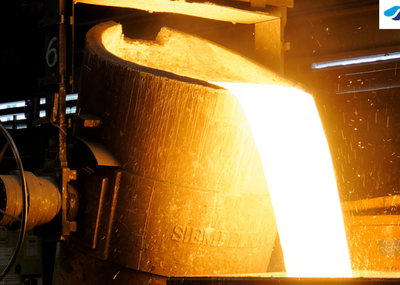
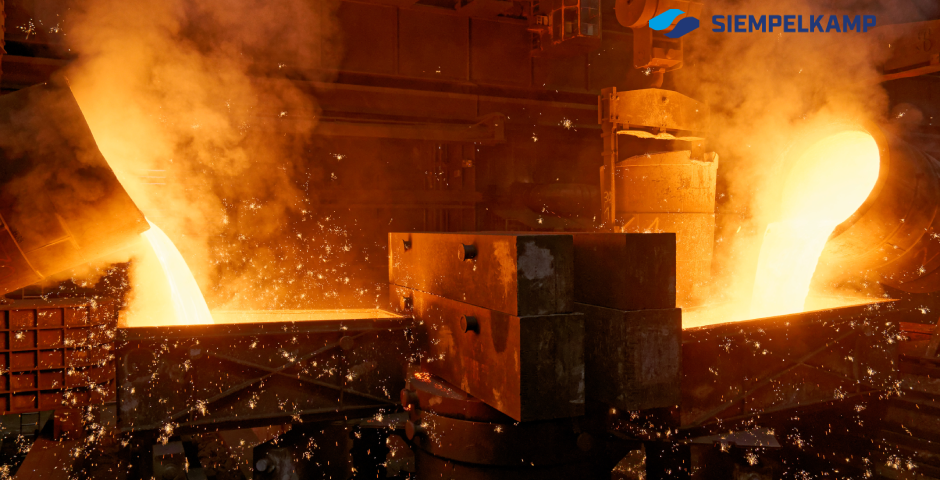
Siempelkamp Giesserei in Krefeld specialises in the production of large hand-moulded castings weighing up to 320 tonnes made of ductile iron and, with a casting volume of over 60,000 tonnes per year and 400 employees, is one of the largest hand-moulding foundries in the world. The comprehensive and customer-oriented service package includes the supply of structural components for many innovative machine manufacturers in the energy industry, the raw materials industry, press construction, steel production, automotive and many other areas of transformation.
Siempelkamp is a globally active group of companies with business areas in mechanical and plant engineering, casting technology, engineering, and service. Worldwide, nearly 3,000 employees ensure that the Siempelkamp Group is represented among the world's leaders with its technologies.