Jonathan Grant to lead global aluminium industry body in demonstrating the benefits of aluminium and the industry’s commitment to sustainable development and responsible production
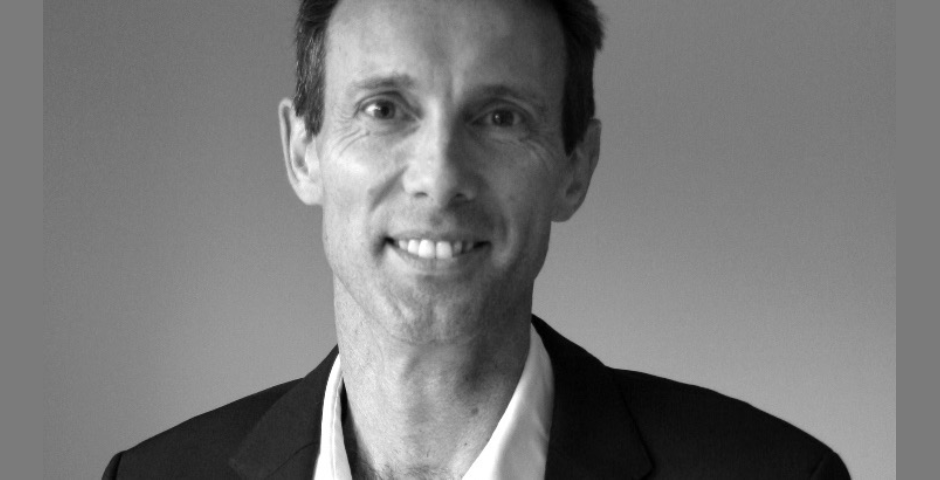
The International Aluminium Institute (IAI) today announced the appointment of Jonathan Grant as its new Secretary General. He will lead the organisation in advancing sustainability initiatives, strengthening industry collaboration, and maintaining the IAI’s position as the authoritative voice of the global primary aluminium industry.
Jonathan Grant is a seasoned climate and sustainability leader with extensive experience across the mining, energy, and professional services sectors. He spent nearly six years at Rio Tinto in policy and strategy roles, where he helped integrate the low-carbon transition into the company’s business strategy and operations, with a particular focus on aluminium and copper as key transition materials.
Mr Grant served on the Board of the International Emissions Trading Association (IETA) for a decade, including two years as Chair, during which membership nearly doubled and the organisation strengthened its financial position. A recognised spokesperson on climate change policy, he has worked extensively with investors, civil society, and industry peers to build consensus on climate and ESG issues, including scope 3 emissions and climate-related shareholder resolutions.
Ali Al Baqali, Chair of the IAI Board, said: “Jonathan was chosen from a strong field of candidates. The Board is delighted to appoint Jonathan Grant as our new Secretary General. He brings exactly the right combination of experience and vision to lead the IAI at this important moment. The aluminium industry has a vital story to tell about its contribution to sustainable development, and equally important work to do in advancing responsible production.”
Mr Grant, who joins the IAI from Rio Tinto, said: “I am honoured to join the IAI at such a critical time for our industry. The aluminium industry can be a force for good and the IAI has built an exceptional platform for driving meaningful change. I look forward to working with our members, partners, and stakeholders to accelerate progress on decarbonisation, advance the circular economy, and advocate for more responsible production across the world.”
Mr Grant added: “The IAI’s strength lies in its collaborative approach and its commitment to rigorous, transparent data. I’m excited to build on the incredible foundations already in place at the IAI and help shape the conversations that will define the industry’s future for decades to come.”
The IAI’s work encompasses demonstrating aluminium’s essential role across sectors – from renewable energy infrastructure and electric vehicles to construction and packaging – while facilitating industry-wide progress on key sustainability challenges. Recent initiatives include the GHG Initiative, established to demonstrate that commitments to cutting greenhouse gas emissions from aluminium production align with national policy goals and global scientific targets, and the Global Beverage Can Circularity Alliance, committed to achieving 80% global aluminium beverage can recycling by 2030 and near 100% by 2050.
The organisation continues to highlight aluminium’s circular economy credentials, with approximately 75% of all aluminium ever produced remaining in use today. Recycling aluminium saves over 16 tonnes of CO₂ for every tonne produced compared to primary production, and by 2050, recycled aluminium production is projected to grow from 32 million tonnes to 81 million tonnes annually.
The outgoing Secretary General, Miles Prosser, has served since 2019 and will continue in his role until February 2026. During Prosser’s tenure, the IAI has strengthened its position as the authoritative voice of the global primary aluminium industry, expanding its influence across sustainability, data transparency, and industry collaboration.
Al Baqali added: “On behalf of the Board, I want to thank Miles for his outstanding leadership over the past six years. He has transformed the IAI into a more influential and effective organisation, and we are grateful for his continued dedication as we complete this transition.”
“We assume that the bottom has been reached at a low level, as order intake is currently leveling off,” said Dr. Markus Heering, Managing Director of the VDW (German Machine Tool Builders' Association) in Frankfurt am Main, commenting on the results. Orders, especially from abroad, are currently being supported primarily by automation, digitalization, service, retrofitting, and sustainability. It is mainly customers from the defense industry, aviation, and medical technology who are investing. The former are expanding their capacities due to high demand. This also supports suppliers of electronics, metal and precision components, and mechanical engineering. However, it will be several months before the orders have an impact on production. The important customer sectors of the automotive and supplier industries remain weak.
Regionally, Europe is currently performing well, particularly Turkey, Italy, and Spain, as well as Eastern Europe, led by Czechia, Poland, and Hungary. Other important markets such as China, South Korea, the US, and Mexico, on the other hand, are showing signs of slowing down.
“The continuing uncertainty in the global economy caused by US tariff policy and the very slow pace of reform in this country are still holding back domestic investment,” says Heering. In addition, factors such as structural change in the automotive industry, ongoing competition with Asian manufacturers, and headwinds from the currency side are weighing on demand, as the euro has appreciated against the US dollar and the yen.
In the first nine months of this year, machine tool sales were down 7 percent. It is expected that in the coming year, Europe, and Germany in particular, will be able to develop from an Achilles' heel into a driving force if the announced investments in defense and infrastructure come to fruition.
Background
The German machine tool industry is one of the five largest branches of mechanical engineering. It supplies production technology for metalworking to all branches of industry and contributes significantly to innovation and productivity gains in industry. Due to its absolutely key position in industrial production, its development is an important indicator of the economic dynamics of the entire industry. In 2024, the industry produced machines and services worth around €14.8 billion with an average of around 65,500 employees (companies with more than 50 employees).
Source: https://vdw.de/